
Hills, beech woods and one mountain that reaches two thousand
Half the region is above seven hundred metres, and the flat land is all behind the beach.
Molise is folded in two by the Apennines. To the west, on the border with Campania and Abruzzo, are the real mountains: the Matese, the Mainarde, the Meta. To the east a run of clay hills descends to the sea, cut by four parallel rivers, the Trigno, the Biferno, the Fortore and the Sinarca, each digging its own valley.
The Matese
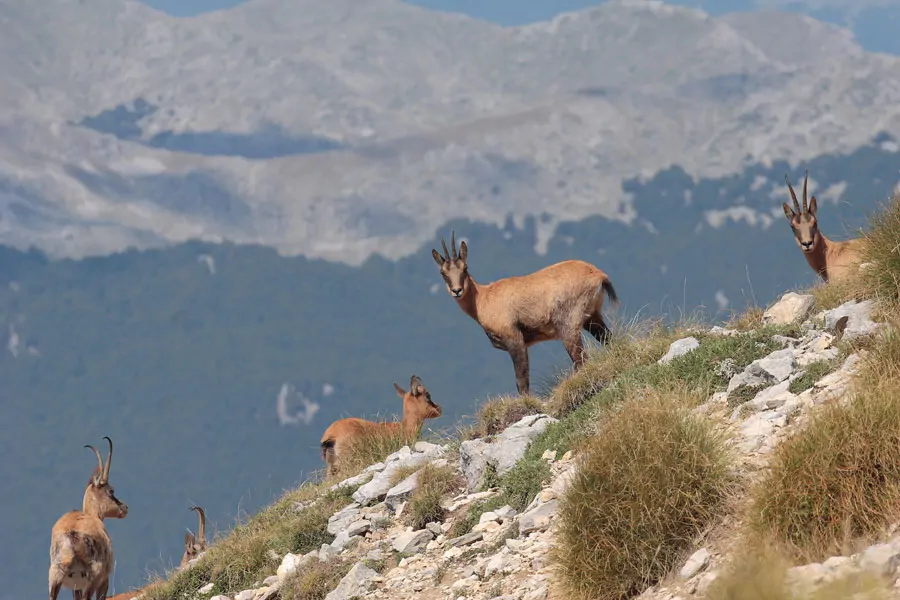
It is the highest massif in the region and Molise shares it with Campania: Monte Miletto reaches 2,050 metres, and below it lies Lake Matese, the highest karst lake in Italy at a little over a thousand metres. In winter people ski at Campitello Matese, in summer they walk the high pastures. It is also one of the coldest places in Italy: at Capracotta, a little to the north, more than two metres of snow fell in a single day in 2015.
The woods
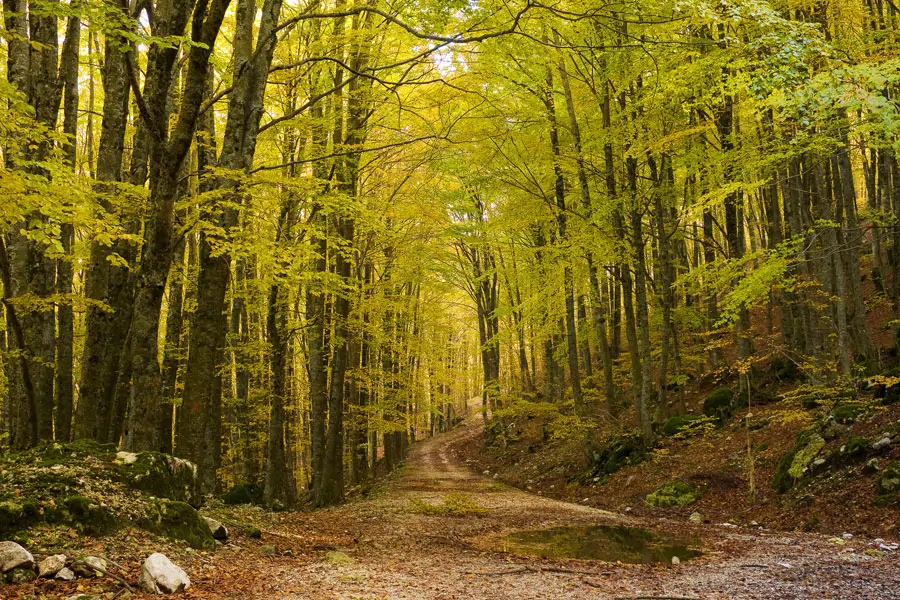
Molise is covered in beech and oak more than you would expect. Collemeluccio and Montedimezzo, near Isernia, have been Unesco reserves since 1977: the silver fir wood at Collemeluccio is one of the last spontaneous stands of that tree in the Apennines. A slice of the Abruzzo, Lazio and Molise national park lies here, around Pizzone and Castel San Vincenzo, and it is the least visited part of the park.
The coast
Thirty-five kilometres: among the Italian regions that have a sea at all, it is the shortest coast of the lot. Sand almost everywhere, with a stretch of pebbles below Termoli, and the trabucchi, the wooden fishing machines you also see in Abruzzo and on the Gargano. Behind the beach run the railway and the motorway, and immediately after them the hills begin.
The water
Natural lakes are almost absent, but there are three large reservoirs: the Liscione on the Biferno, crossed by a viaduct more than a kilometre long near Guardialfiera, Occhito on the Fortore at the Puglia border, and the small Castel San Vincenzo below the Mainarde. They serve irrigation and power, and when the summer is dry they drop by several metres.
The drove roads
They are the most Molisan thing there is: grass roads up to a hundred and eleven metres wide, used for centuries to move flocks from Abruzzo to Puglia. Four great ones cross the region, and they are protected as archaeological property; the transhumance that used them has been Unesco intangible heritage since 2019. Today they are walked or cycled, and along many stretches you can still pick them out by the different colour of the grass.